A Buyer’s Guide to Cast Iron Cookware OEM Programs
September 15, 2026
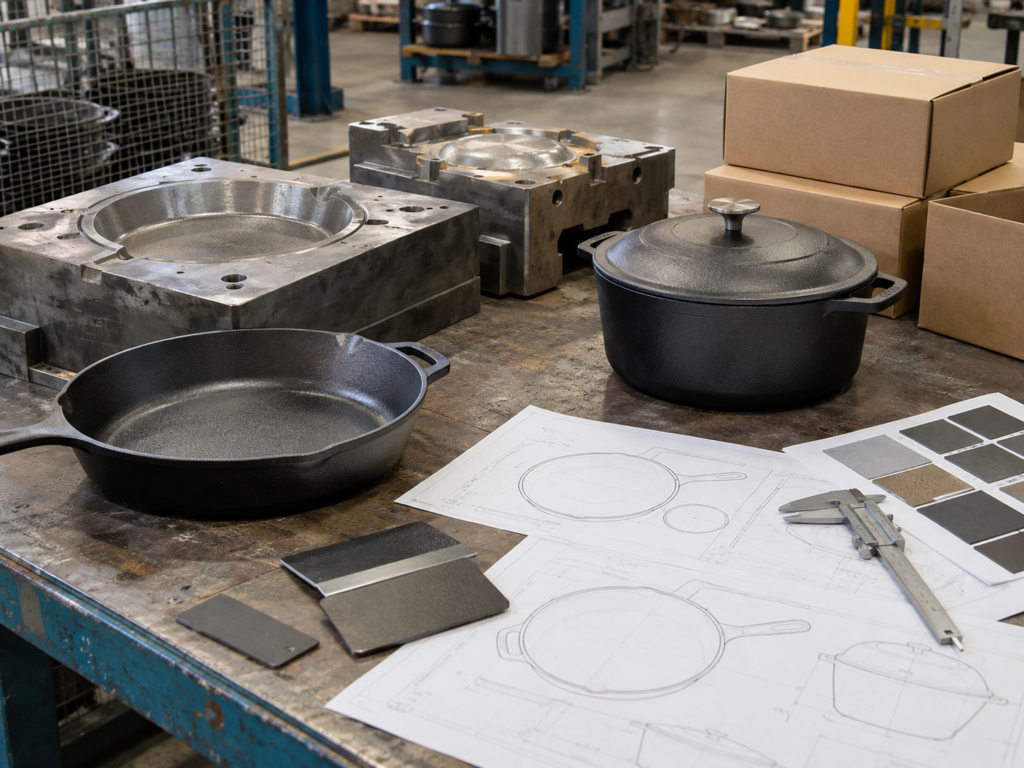
A successful cast iron cookware OEM project starts long before mass production. Product specifications, tooling, samples, surface finish, packaging and compliance requirements all need to be confirmed before an order moves into production.
For buyers, the goal is not simply to find a factory that can make the product, but to build a clear development process that reduces changes, delays and quality risks later.
1. Start with a Clear Product Brief
This normally includes product type, size, weight, surface finish, handle and lid design, logo, packaging and target market. A more complete brief allows the factory to confirm tooling, sampling and production requirements more accurately.
2. Check Existing Tooling First
Standard product sizes may already be available from existing tooling. A new mold is normally needed when the shape, dimensions, handle structure or other design features are customized. Using existing tooling can reduce development time and initial cost, while custom tooling gives buyers greater control over product design.
3. Confirm Samples Before Production
Buyers should review dimensions, weight, surface finish, lid fit, handles, logo placement, color and packaging before approving mass production.
4. Define the Surface Finish
- For pre-seasoned cast iron, buyers should review surface texture, seasoning coverage and rust protection.
- For enameled cookware, color consistency, coating coverage, rim quality and firing finish should be confirmed during sampling.
5. Plan Packaging Early
Cast iron cookware is heavy, so packaging should be treated as part of product development rather than an afterthought.Requirements may include inner protection, carton strength, labeling, barcodes, e-commerce preparation and palletizing.
6. Confirm Quality and Compliance Requirements
- Inspection standards and required documents should be agreed before production starts.
- Requirements vary by market, so buyers should confirm which product tests, food-contact documents or factory compliance records are required for their destination market.
7. Agree on Production and Delivery
- Lead time depends on product complexity, tooling, enamel colors, packaging and order quantity.
- A realistic production schedule should be confirmed after specifications and samples are approved.
Final Note
A good OEM program is built around clear specifications, approved samples and controlled production steps. The earlier these points are confirmed, the easier it is to move from development into repeat production.