
How Enamel Color Customization Works
February 20, 2024
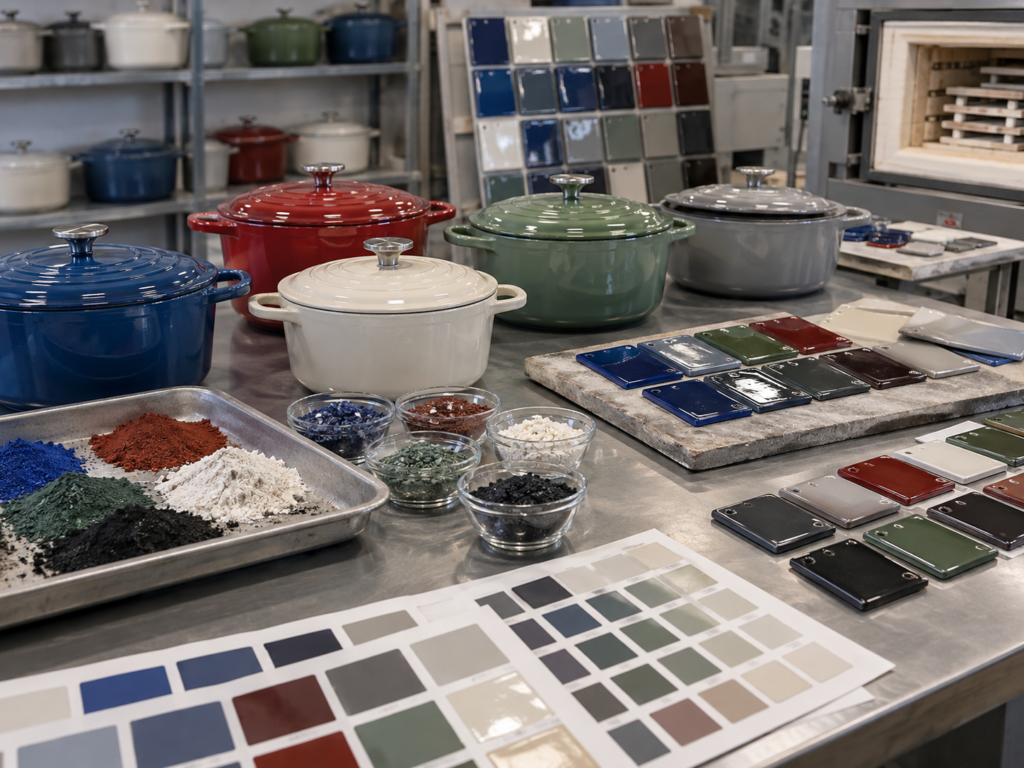
Introduction
Enamel color development is not simply a matter of choosing a color from a chart. The final appearance depends on the enamel formulation, firing process, cast iron surface and production conditions.
For buyers developing a custom cookware range, the most important step is to confirm the target color through physical samples before mass production.
1. Start with a Color Reference
The development process normally begins with a clear color reference.
This may include:
- Pantone reference
- RAL reference
- Physical color sample
- Existing product sample
- Customer-approved color chip
A physical reference is usually more reliable than a digital image because screen colors can vary significantly.
2. Enamel Colors Are Created by Material Formulation
Different enamel colors are produced by adjusting the formulation of enamel frits, pigments and other coating materials.
The target color is developed through controlled material ratios rather than by simply “mixing paint.”
Small adjustments in the formulation can affect:
- Color tone
- Gloss level
- Opacity
- Surface appearance
- Firing result
For this reason, color development normally requires several test samples.
3. Firing Changes the Final Appearance
The enamel color before firing may look different from the final fired surface.
High-temperature firing affects the way the coating develops on the cast iron body.
The final result can be influenced by:
- Firing temperature
- Firing time
- Coating thickness
- Base enamel
- Product shape
- Furnace conditions
This is why buyers should always approve a fired sample rather than relying only on an unfired color reference.
4. Confirm the Sample Before Production
Once the target color has been developed, a physical cookware sample should be produced.
Buyers should review:
- Overall color
- Gloss or matte finish
- Color depth
- Interior and exterior combination
- Rim appearance
- Knob and accessory matching
Mass production should begin only after the approved sample is confirmed.
5. Understand Normal Batch Variation
Even with controlled production, slight color variation can occur between enamel batches.
The goal is not absolute mathematical color identity, but controlled visual consistency within an agreed range.
For larger programs, factories normally use approved samples and production standards as references during batch control.
6. Plan Color Development Early
Custom enamel color development should be started before the final production schedule is confirmed.
Additional development time may be required when:
- The target color is unusual
- Multiple colors are needed
- Matte or special finishes are required
- Interior and exterior colors differ
- The project requires strict color matching
Early color confirmation helps avoid delays later.
Final Note
A successful enamel color program depends on clear references, physical sample approval and controlled production conditions.
The earlier the target color is confirmed, the easier it is to maintain consistency when the project moves into mass production.