Potjie Pot Sourcing Guide for Importers
December 5, 2023
Introduction
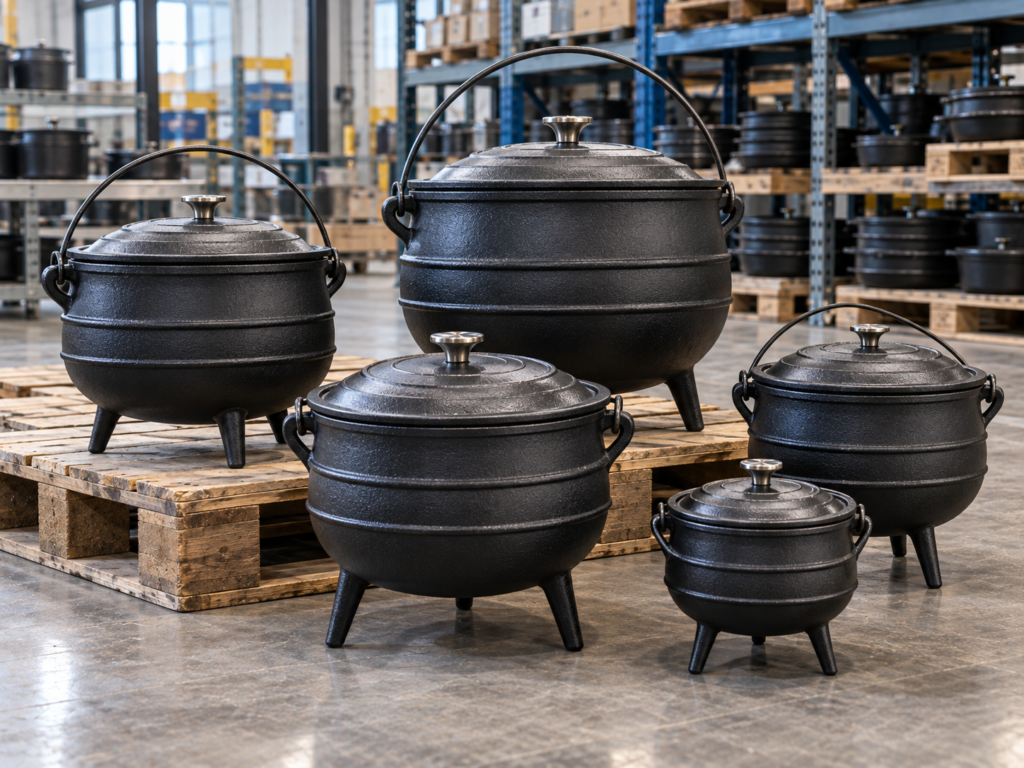
Potjie pots are a specialized cast iron product with different sourcing considerations from standard skillets or Dutch ovens.
Size, weight, wall thickness, lid fit, legs, handles and surface treatment all affect the final product.
For importers, selecting the right specification is important before comparing prices.
1. Choose the Right Size Range
Potjie pots are commonly supplied in multiple sizes.
Before ordering, buyers should consider:
- Target customer
- Cooking capacity
- Retail price range
- Shipping weight
- Packaging size
- Product assortment
A smaller range may be better for first orders, while established distributors may prefer a broader size series.
2. Check Product Weight and Wall Thickness
Potjie pots are heavy products, and weight can vary considerably between designs.
Buyers should confirm:
- Net weight
- Wall thickness
- Bottom thickness
- Lid weight
- Overall dimensions
These factors affect both cooking performance and shipping cost.
3. Inspect the Legs and Handle Structure
The legs and carrying handle are important functional parts of a potjie pot.
Buyers should check:
- Leg stability
- Leg length
- Handle attachment
- Handle thickness
- Balance when lifted
The pot should stand securely and remain practical to move when empty.
4. Confirm the Lid Fit
A well-fitting lid is important for slow cooking.
During sampling, buyers should check:
- Lid diameter
- Lid seating
- Gap around the rim
- Knob or lifting point
- Overall fit
Small dimensional differences can affect the user experience.
5. Choose the Surface Finish
Most traditional potjie pots use a black cast iron finish.
Depending on the project, buyers may consider:
- Pre-seasoned finish
- Oil-coated finish
- Natural cast finish
- Custom treatment
The finish should match the target market and expected use conditions.
6. Packaging Requires Extra Attention
Potjie pots are bulky and heavy.
Packaging should protect:
- Legs
- Lid
- Handle
- Outer surface
Buyers should also consider carton strength, internal protection and pallet configuration.
For mixed-size orders, efficient carton planning can help reduce transport space.
7. Confirm Export Requirements Early
Before production, buyers should confirm:
- Product labeling
- Carton marks
- Barcode requirements
- Pallet requirements
- Shipping documents
- Destination market requirements
This helps avoid last-minute changes during packing.
Final Note
A successful potjie program depends on selecting the right sizes, controlling product weight and confirming durable packaging.